Showing posts with label kaiseki meal. Show all posts

Nov 19, 2013

Activities at Issoan

For my blog readers, I apologize for not posting.  It seems like I do this periodically  - get out of the habit of blogging and then let it go for a while.  I will do better in the future.

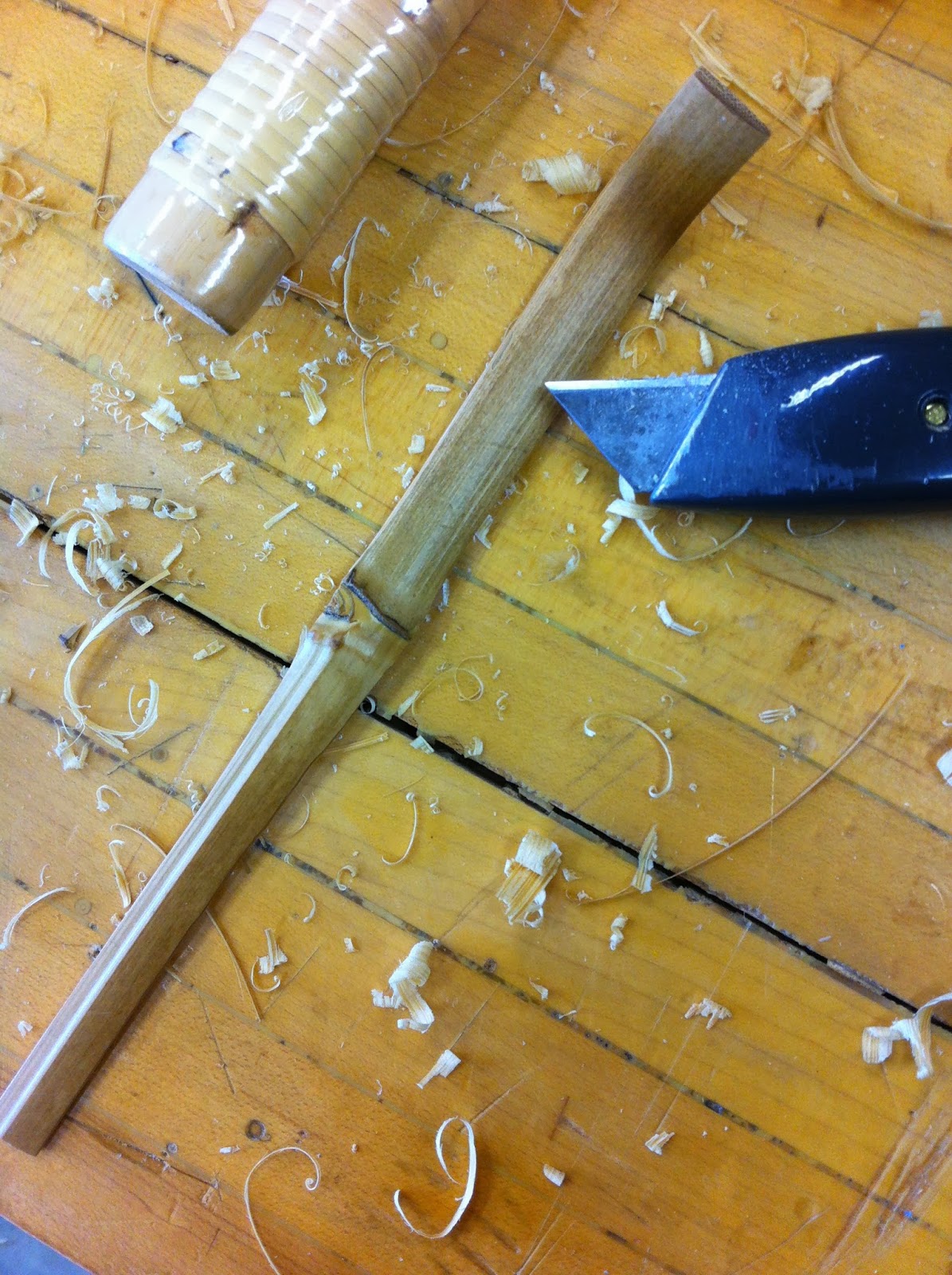
Let's see, we have been busy this summer.  To begin with we have had a workshop or special event since August.  (Image heavy post follows)  Here are some photos from the chashaku carving and bamboo hanaire making workshop


Then we had a chabana class


And then in September we had a kaiseki cooking class

Also in September we had Nomura-san from Soujuan kimono who came to exhibit his art kimono and sell kimono and accessories. Kageyama-san came too and she gave kimono dressing lessons as well,


Whew, that's a lot, but we still have more to come....I'll post them tomorrow.

Feb 19, 2013

Worshops and events scheduled for this spring

Eventing Chaban
A lot of things are going on this spring at Issoan Tea School

Kagetsu study, Sunday February 24th, 1:30-4:00

Kimono dressing workshop: Saturday March 9-3-4 pm.  Bring your kimono and accessories.  Individual help in dressing yourself will be provided.

Soujuan Kimono of Kyoto will be in Portland Wednesday March 13,  7-9 pm.  A short talk on kimono and kimono dressing lesson from Ms. Kageyama, professional dresser.

New Introduction to Chado class begins Saturday March 9, 1-3 pm for 10 Saturdays.  Cost is $250.  Please reserve your spot with $50 deposit by clicking on Paypal in the left column.  Space is limited and filling up quickly.

April Kaiseki cooking class - Basics of kaiseki, the meal for Japanese Tea Ceremony.  We will prepare and serve a basic menu for spring chaji.  Kaiseki dogu, preparation and timing will be covered.  A shopping trip for ingredients will be included if students are available.

If anyone is interested, please contact Margie 503-645-7058, margie@issoantea.com

Feb 19, 2011

Book Review: Kitcho

I recently hosted a good friend of mine for the weekend and as a thank you he ordered this beautiful book: Kitcho, Japan's Ultimate Dining Experience, by Kunio Tokuoka. Hardbound  ISBN 978-4-7700-3122-8

This is book is the story of Kitcho, a kaiseki restaraunt with a premier reputation in Japan.   Chef Tokuoka relates how is grandfather began serving meals based on historical records of tea ceremonies given by Matsudaira Fumai. Kaiseki was typically not available unless you were invited to a tea ceremony.  Today, thanks to Kitcho's founder, Teiichi Yuki, the principals of seasonality, simple preparation and beautiful presentation of the kaiseki meal is firmly planted in the mainstream of Japanese haute cuisine.

The book is divided into five sections:  Spring Kaiseki, Summer Kaiseki, Fall Kaiseki, Winter Kaiseki and The Kaiseki Kitchen.  The seasonal sections feature exquisite food photography of different seasonal dishes.  The text combines commentary by chef Tokuoka and historical and cultural asides; from Rimpa style painting to court poetry that has inspired the menu. The last section is a look behind the scenes at Kitcho in the kitchen.  This section also includes a recipes for dashi and sauces, food notes to the seasonal dishes presented and a glossary of food terms.

The photographs in the book are outstanding.  Not only are there photos of the kaiseki dishes, but also elements of tea such as chabana, the tokonoma, teabowls, calligraphy, and sweets.  You will enjoy this book as inspiriation for your next chaji, and perhaps learn a little more about the history and culture of Japan.

Dec 15, 2010

The season for Udon

Cold and rainy weather make it an ideal time for udon noodles.  When I lived in Kyoto, ankake udon was one of my favorite winter time dishes.  Ankake udon soup is thickened with starch and grated ginger adds a zing and warmth.  I love the big fat noodles and you can add your own garnishes to suit your own taste.

We recently had a meeting to re-start our Japanese tea garden project at Ryokusuido.  Part of the meeting was making and eating udon.

Below is a recipe for ankake udon from one of my former students, Ikuko.  Thank you for teaching us.


Ankake Udon (recipe for 2 people)
Make dashi soup stock. You can do this one of three ways:
  1. From scratch:  for each 2 1/2 cups of water use a piece of dried konbu (kelp seaweed) 2" x 1". Wipe konbu with a clean damp cloth and place in pot of cold water. Bring to boil.  Just before water boils, remove and discard konbu.  Add 1/2 cup of katsuobushi (dried bonito flakes) and remove from heat.  Strain any foam that forms on the surface.  Let bonito flakes settle to the bottom.  Let steep for a few minutes then strain through several layers of cheesecloth. 
  2. Use dashi powder (hon-dashi or dashi-no-moto) following package directions.  Try to find one without MSG.
  3. Use a combination of konbu and dashi powder.
Make Udon soup:
For every 2 1/2 cups of dashi stock add:
2T sake
2T mirin
2T shoyu (soy sauce)
1/2 t salt
Adjust the combination above to your own taste.

Then mix a paste of
2 1/2 T of katakuriko (potato starch) or cornstarch
4T of water
Stir slowly and gently into the heated stock. The soup will begin to thicken, allow to simmer gently for a couple of minutes, stirring constantly. Remove from heat.

Cook udon noodles in boiling salted water until done (approx. 8-10 minutes). Drain.

To serve, put Udon noodles in a bowl, add soup and garnish with 1/2 to 1 t. of fresh grated ginger, 2T of finely sliced green onions, and shichimi (blended hot peppers) to taste. Sliced shiitake mushrooms cooked in dashi, and/or fried tofu squares may be added.  Other vegetables (also cooked in dashi) can be added for additional garnish.

Enjoy!
Nov 17, 2009

Chakai went well


I am happy to report that the chakai went very well. I know that the meal is not the high point of the chakai, but cooking is not my most strong point, so I am a little extra careful when I am preparing a meal for others. Here is a photo of the tray before it went out to the first guest. I forgot my camera, so this is a rather rough photo from the camera phone.

I think the guests all had a good time, but I want to remind all of you who are thinking of putting on a chakai, to think of the comfort of your guests. I had planned for this chakai to last about 2 hours with a 10 minute break in between the meal and the koicha. For most of my students, this is a long time to be sitting seiza in the tea room. At the end of the first hour, most of the guests were suffering and needed the break. For some it was torture to return to the tea room and sit through the koicha procedure (about 25 minutes for 5 guests). After koicha, I brought in zabuton and seiza stools to help the guests and alleviate their pain. There was a heartfelt sigh of relief when I brought these in and proceeded to make usucha.

Nov 16, 2009

Pre-chakai jitters

Tonight, I will be putting on a chakai for Robiraki. My students will be attending their first tea event and I want to make it special. I will be doing a tenshin meal, koicha and usucha.

We will have tea by candlelight. For the meal, pressed rice garnished with furikake, grilled fish, sliced tuna in a citrus soy sauce, marinated oyster mushrooms, sweet potato cooked in dashi, and daikon radish cut in the shape of a chrysanthemum. The nimono or boiled soup dish will have taro root, carrot, mitsuba and hinoki mushrooms. I prepared zenzai (sweet bean soup) for sweets. I also made some pressed sweets in the shape of mushrooms and gourds.

Mr. Nishiura will be the honored guest and I am a little apprehensive because he is so accomplished in Japanese arts. I hope it will go well.